Trim products are among the most visible building components in any structure, making material selection critical for both long-term performance and aesthetic appeal. Exterior trim faces constant UV exposure, moisture infiltration, and temperature cycling, while interior trim in high-traffic areas must resist impacts, scratches, and humidity. The wrong material choice leads to warping, fading, cracking, mold growth, and costly replacement cycles.
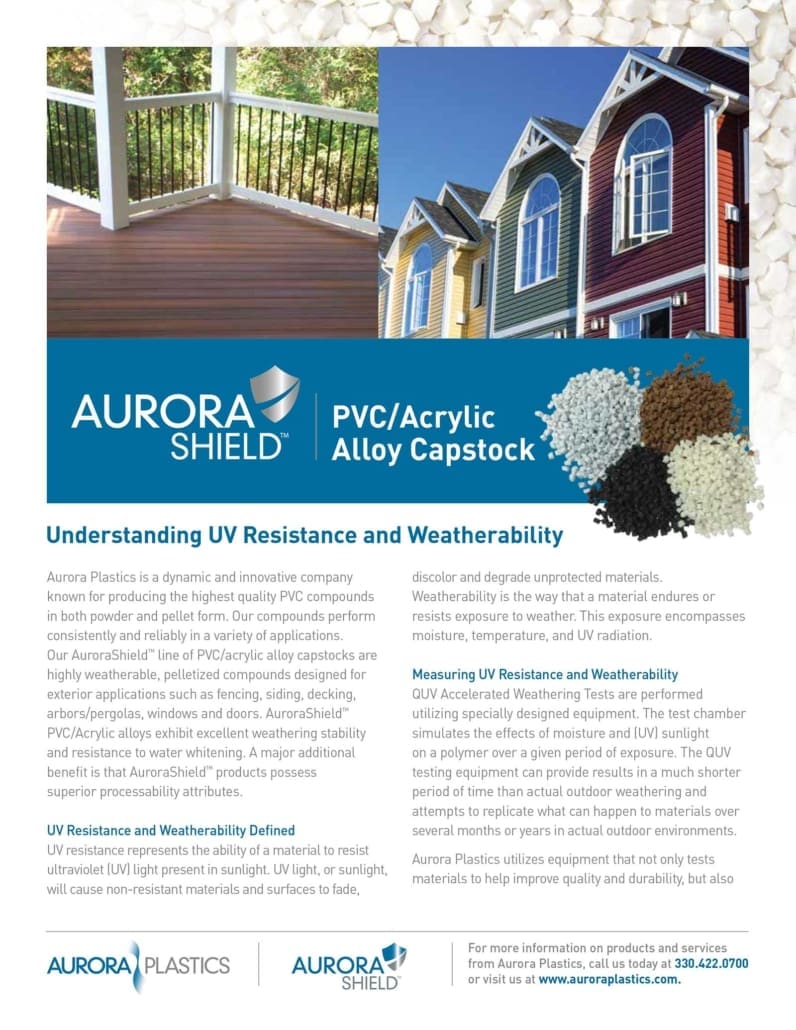
- Weather & UV Degradation: Exterior trim is constantly exposed to UV rays, rain, snow, and temperature extremes that cause fading, warping, and material breakdown in inferior compounds
- Impact & Abrasion Resistance: Trim in commercial buildings, schools, hospitals, and high-traffic areas must withstand constant contact, bumps, and scuffing without cracking or denting
- Moisture & Mold Prevention: Bathroom, kitchen, and exterior trim applications require materials that resist moisture absorption, mold growth, and water damage over time
- Regulatory & Fire Compliance: Building codes require trim materials to meet fire resistance, low-smoke, and environmental standards including ASTM, ICC, and local building regulations
Our AuroraGuard™, AuroraTec™, and AuroraFlex™ formulations provide the complete material portfolio for both interior and exterior trim manufacturing.