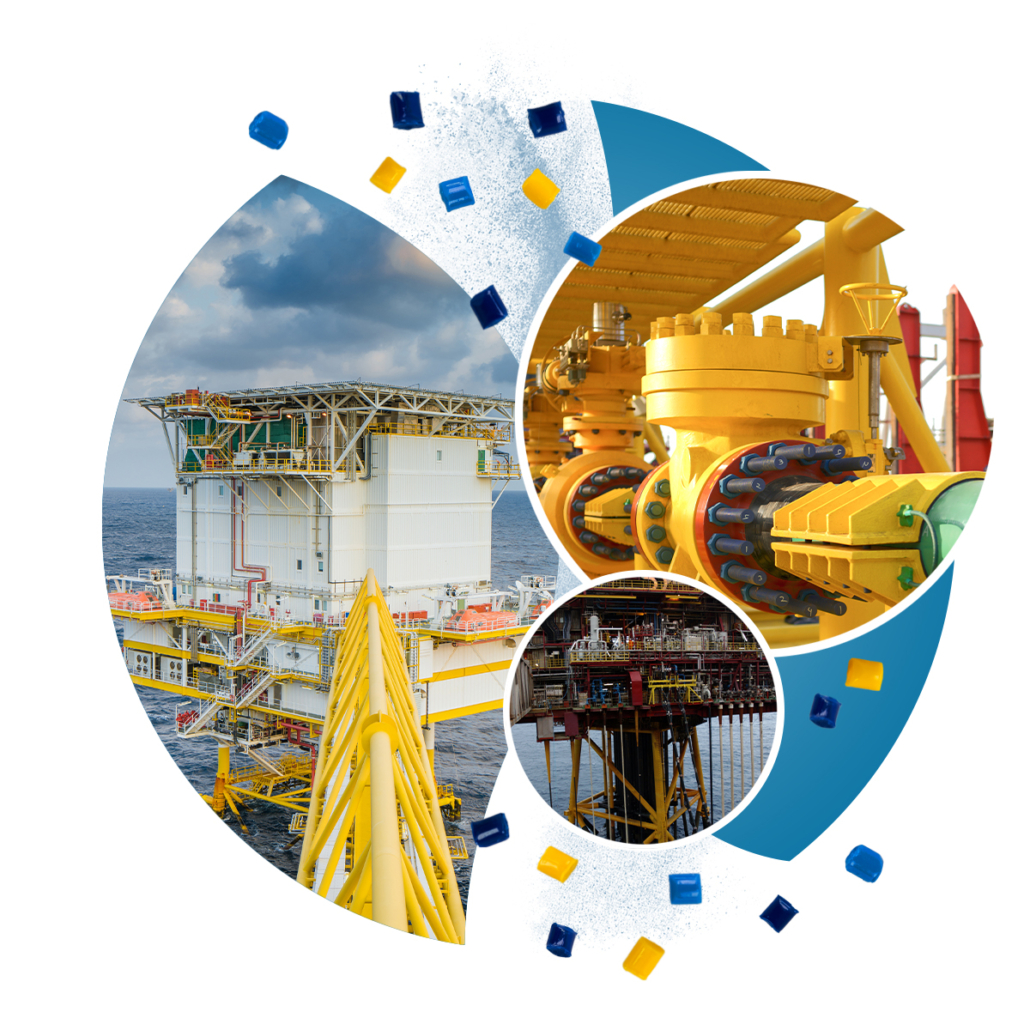
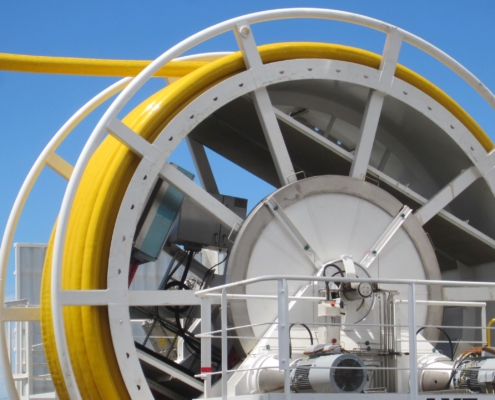
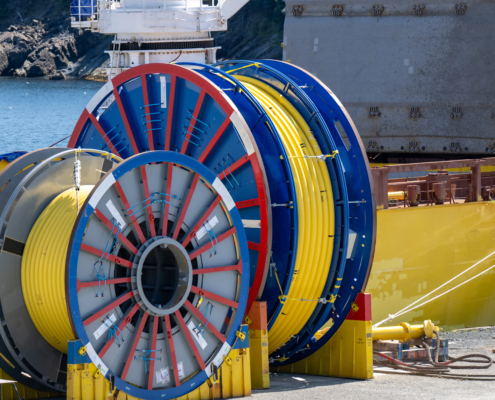
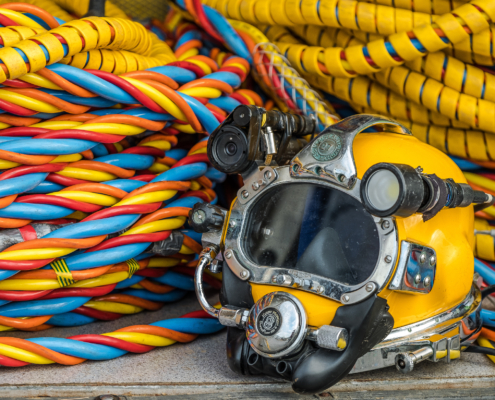
Umbilical systems are the lifelines of offshore and subsea operations, delivering hydraulic fluid, electrical power, chemical injection, and data communication between surface facilities and subsea equipment. Material failure in an umbilical can result in production shutdowns, environmental incidents, and multimillion-dollar intervention costs. Selecting the right polymer compounds is essential for ensuring decades of reliable service in the harshest operating environments on earth.
- Chemical & Corrosion Exposure: Umbilicals face constant contact with saltwater, hydrocarbons, methanol, glycol, production chemicals, and corrosive fluids that degrade inferior materials over time
- Extreme Pressure & Mechanical Stress: Deep-sea umbilicals must withstand hydrostatic pressures at depths exceeding 3,000 meters while enduring installation loads, dynamic movement, and fatigue cycling
- Flexibility & Kink Resistance: Umbilicals require materials that maintain flexibility during installation, dynamic operation, and repeated bending cycles without cracking, kinking, or fatigue failure
- Electrical & Thermal Insulation: Power and communication umbilicals demand high-dielectric materials that prevent electrical failures, signal degradation, and overheating in subsea and industrial environments
- Regulatory & Safety Compliance: Offshore umbilical materials must meet API, ISO, ASTM, REACH, and operator-specific standards for fire safety, environmental impact, and long-term subsea performance
Our AuroraTec™. rigid PVC compounds and AuroraFlex™ flexible PVC formulations provide the complete material portfolio for umbilical manufacturers.