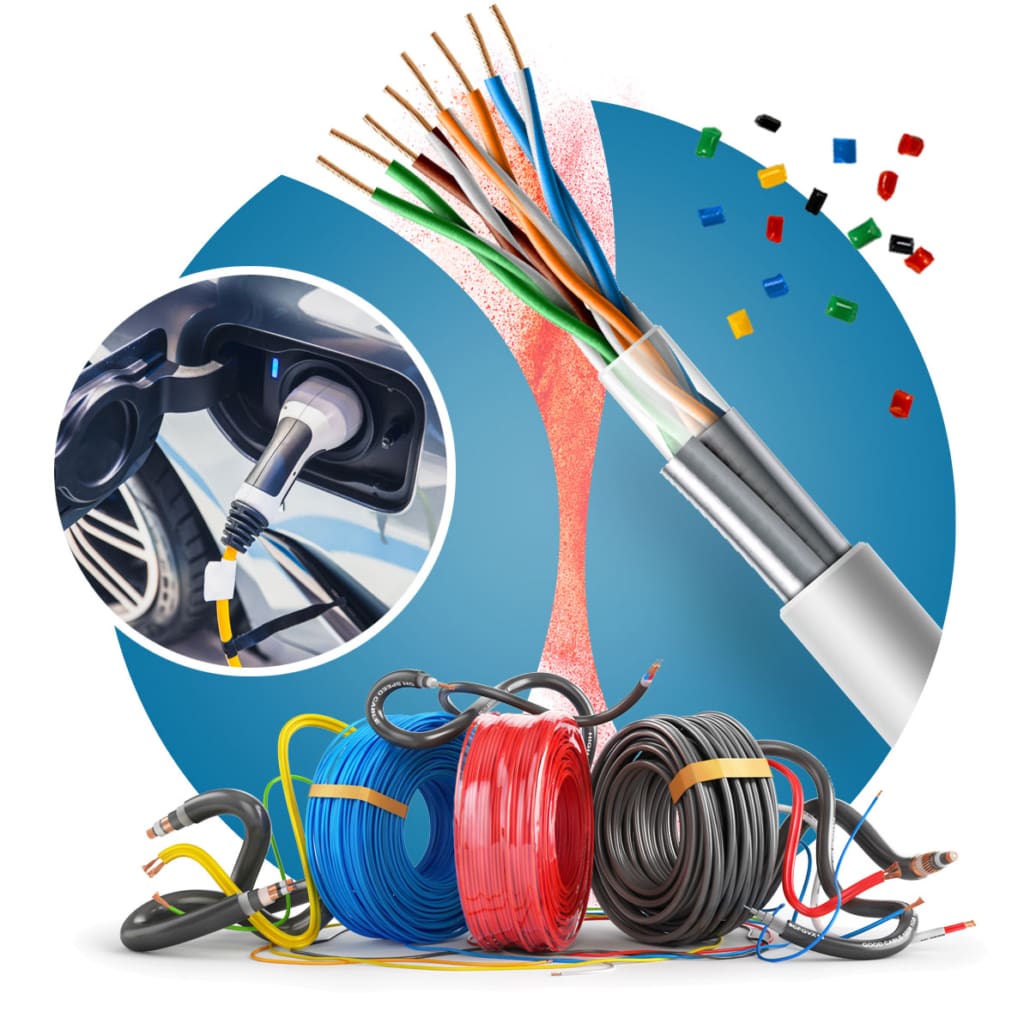
Wire coating compound selection directly impacts electrical safety, flame performance, mechanical durability, chemical resistance, and regulatory compliance of the finished wire product. The coating must provide reliable electrical insulation under continuous service, withstand installation handling without cracking or tearing, resist the specific chemicals and temperatures of its operating environment, and meet the UL, NEC, and industry-specific fire safety standards required for the end-use application.
- Electrical Insulation: The wire coating is the primary barrier preventing electrical contact, short circuits, and shock hazards. Compound dielectric properties must be consistent and reliable throughout the wire’s service life
- Flame Retardancy & Fire Safety: UL flame ratings (VW-1, FT-4, UL 94 V0) and NEC plenum/riser/general-purpose designations dictate which compounds are acceptable. Non-compliant coatings block market access
- Flexibility & Durometer Control: Wire coating compounds must balance flexibility for installation routing with sufficient stiffness for handling. Durometer must be precisely controlled for specific wire gauge and application requirements
- Chemical & Environmental Resistance: Wire coatings face exposure to oils, solvents, cleaning agents, moisture, UV radiation, and temperature extremes depending on the installation environment
- Processing Efficiency: Wire coating extrusion runs at high speeds with tight wall thickness tolerances. Compounds must deliver consistent melt flow, excellent surface finish, and reliable dimensional control at production line speeds
- Regulatory & Market Access: Different wire markets require different compound chemistries. Building wire needs PVC. Transit and telecom may require LSZH. Automotive demands specific temperature and chemical ratings. Compound selection determines which markets your wire can serve
Our AuroraFlex™ and AuroraGuard™ product families encompass flexible PVC (35A to 95A Shore A durometer), low-smoke zero-halogen (LSZH) compounds, CPE (chlorinated polyethylene) alloys, SBS and SEBS styrenic block copolymer compounds, thermoplastic elastomers (TPE/TPR), custom thermoplastic olefins (TPO), and flame retardant concentrates with up to 85% active FR loading.